

KIM
PEIRANO,
Helping organizations align with integrity, clarity & sustainability through people, purpose & impact. Organizational Psychologist | Non-profit & Business Consulting | Events & Development | Dynamic Program & People Manager

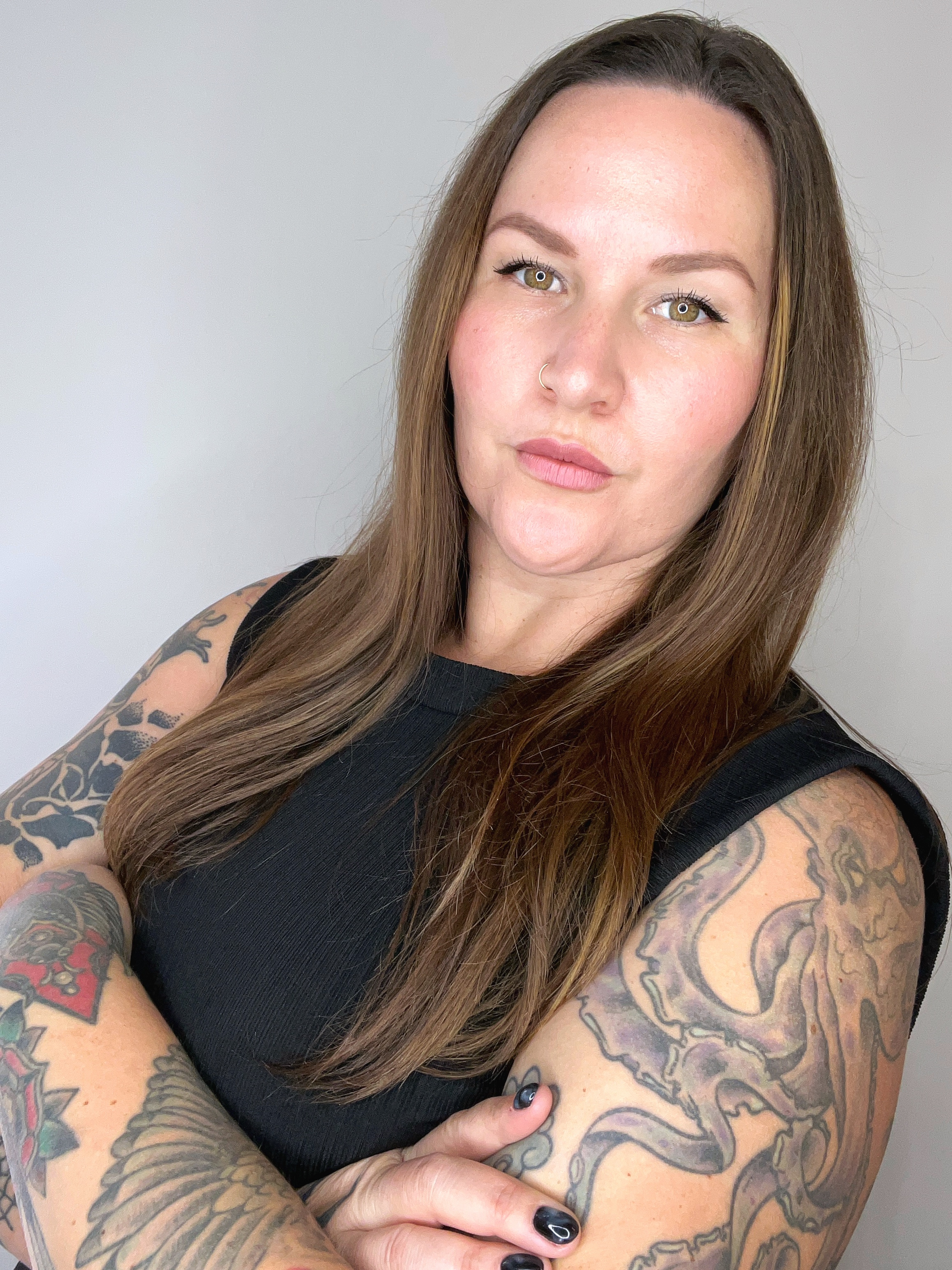
Hi, I'm Kim Peirano. I help leaders see the patterns, risks, and friction points shaping how their organization actually works, often before they become bigger problems. Drawing on organizational psychology, research, and systems thinking, I help teams make sense of conflict, unclear roles, operational breakdowns, and change. Then we build practical, evidence-informed ways forward that strengthen both the work and the people doing it.
Organizational consulting for start-ups, small and mid-sized businesses, and nonprofits.
Oakland and the San Francisco Bay Area · Available for remote engagements nationwide
MSOP

Nearly 20 years of entrepreneurship and organizational leadership in for and non-profit organizations.
Nonprofit founder, CEO and former association board leader.
M.S. in Organizational Psychology with Honors from the University of Hartford
Evidence-Informed practice supported by the latest peer-reviewed research
The Symptoms are Visible. The Root Cause Isn't Always Obvious.
Organizational culture tends to get treated as the soft side of a business, something to attend to once the 'real work' is finished. The research doesn't support that view. Clarity, trust, fairness, leadership behavior, and communication operate as an interconnected system, and that system drives most of what an organization is trying to manage: engagement, retention, performance, and the ability to adapt.
When results slip, and no operational cause is apparent, the cause usually lies somewhere in that system. The difficulty is that a symptom rarely appears where the problem starts.
-
Disengagement can trace back to roles that were never clearly defined.
-
A lack of psychological safety often begins with how leaders communicate.
-
A string of bad hires may have less to do with the candidates than with a job nobody analyzed.
Treating the symptom costs money and seldom holds. Locating the source lets a small organization spend limited time and budget where it will actually make a difference.
Sometimes, it's actually quite simple. A full-time employee spends more than eight hours of every workday on the job, which gives an organization real influence over the quality of a person's life.
I believe that influence carries an obligation, and research is fairly consistent: organizations that honor it retain their people and perform better.

Organizational Consulting Services for Startups, Small-Mid Size Business & Non-Profits
I work with organizations that are usually too small or too new to have an organizational development department, and too complex to go without one. That includes startups whose headcount has outgrown their structure, small businesses where the owner is still personally holding everything together, and nonprofits carrying an ambitious mission on a lean staff.
My own background spans healthcare, nonprofits, and entertainment, so I'm familiar with how differently those sectors operate. I'm based in Oakland and often work with organizations in the San Francisco Bay Area, though my practice is primarily remote and I work with clients across the United States.
Every organization has a different combination of people, resources, constraints, and goals. I work with leaders to identify the right scope of support rather than forcing every problem into a preset package; most engagements fall under more than one of these categories.

Organizational Effectiveness
Diagnosing how the organization actually functions, and correcting what holds it back.

Inclusive Workplace Design
Disability inclusion and neuroinclusion, designed into how the work gets done.

People Analytics & Employee Listening
Accurate measurements and insights, and a clear path forward.

Leadership Development
Developing leaders whose behavior strengthens the organization around them.
Focused Projects
Not every problem calls for a full engagement. Sometimes you know exactly what needs fixing and want it done well. Each of these is a self-contained project with a defined scope and a clear deliverable, and each can stand on its own. We offer tailored solutions for your one-off human resources and people-related tasks. Some examples of the types of projects we can support are listed below. Click an icon to learn more about working together on a limited engagement.

Job Description & Hiring Process Redesign
Editor in Chief

Existing Survey Review, Analysis & Redesign
Assistant Manager

Engagement or Exit Survey Design & Analysis
Programming Editor

Team & Leadership Development Workshops
Art Director
Why I do this work
Hi, I'm Kim Peirano, MSOP | INTJ | Enneagram 6w5
I came to organizational psychology as a lifelong entrepreneur who saw the inefficiencies and poor treatment of people in many corporate workplaces. The lack of autonomy and room to improve what was clearly not working drove me away from corporate roles. It also clarified the work I want to do: help organizations that genuinely want better outcomes for their people, not simply more profit from them.
I founded a nonprofit, and for more than fifteen years I owned and ran a multi-location clinical practice in a field known for high attrition. Keeping that business healthy taught me that how people are treated at work is a structural matter, with consequences for everything an organization produces.
My first career and clinical training were in acupuncture, which surprises people until I explain what that training develops. It is a discipline of pattern recognition: reading a set of symptoms that appear unrelated and tracing them to the system producing them. Organizations present the same way. Turnover, conflict, and disengagement are symptoms, and the useful question is: what do they have in common?
I completed a master’s degree in organizational psychology to bring research and method to that instinct, and developed the Organizational Ecosystem Model™ to map how the elements of a culture act on one another. I’m also a neurodivergent spoonie, and I’ve built my career outside conventional corporate structures. Both shape how seriously I take work design.
I do this because organizations owe something to the people who spend their working lives inside them. I want more workplaces to be places people are glad to work, and where everyone can feel like they belong.


How an Engagement Works
At Integrity Catalyst, we don't work from a fixed menu. Each engagement is designed around what is actually happening in your organization, and the first two steps exist to establish exactly that.
1/ Complementary Consultation
Thirty minutes to talk through what prompted you to reach out and to decide whether we're a good fit to work together. There is no cost and no obligation.
2/ 90-Minute Triage Session
A longer working session to define the problem properly. You may arrive with a name for it, such as low engagement, a difficult team, or a hiring problem. We examine what sits underneath that name, what needs to change, and what changing it would require. You leave with a strategy.
3/ A Tailored Engagement
From there I design the work: a focused project or a broader engagement, which of the four areas it draws on, what gets measured, who needs to be involved, and how long it should take. The scope is sized to your organization and your budget, with nonprofit pricing available.
4/ Impact Follow-Up
Where it's useful, we measure again once the changes are in place, so you know whether the intervention did what it was meant to do.
Musings from our Blog




STAY IN THE KNOW
Frequently Asked Questions
/FAQ
What is organizational consulting?
Organizational consulting is outside expertise applied to how an organization functions: its structure, its leadership, its culture, and the experience of the people who work in it. Startups, small businesses, and nonprofits come to it for a few different reasons. Some are facing a problem they can't get to the bottom of. Some have a specific, well-defined problem and want a skilled extra hand. And many are led by people who were never taught how to manage an organization. Most founders and directors earned their position by being good at the work itself, and leading people is a separate discipline that few are trained in. When that gap goes unaddressed, the business and its employees both pay for it. Consulting closes the gap without anyone having to learn by trial and error.
What does an Organizational Psychologist do? How is it different than HR?
An organizational psychologist holds an advanced degree in applied or industrial-organizational psychology and applies the science of human behavior to workplaces. In effect, the organization is the patient. There is real overlap with HR consulting, and the difference is mostly one of vantage point. HR consulting tends to focus on the systems that keep an organization running properly, such as compliance, policy, and administration, and that work is essential. I start from the employee's experience. I ask what is good for the business and also what is good for the people in it, including their well-being, their mental health, and their ability to do good work, on the evidence that the two are closely linked. There are also HR functions I don't perform. I don't run payroll, administer benefits, or implement HR systems.
How do I know if my organization needs this?
Most of the organizations I work with recognize themselves in one of these situations. • Something has gone seriously wrong. A blowup, a lawsuit, a wave of departures. You want the problem resolved and you want to know it won't happen again, which means addressing why it happened and not only smoothing it over. • Something has changed. New leadership, a restructure, rapid growth, a significant increase in funding. Even welcome change puts strain on an organization, and you want your people and your plans to keep pace with it. • Things aren't working, and you can't say why. There is no crisis, but morale, retention, or performance is off, and the cause isn't obvious. • You want to get ahead of it. You care how the people in your organization are treated, and you'd like the structures in place before a problem ever develops. This is the work I most enjoy. • You need one thing done well. You keep hiring the wrong people for a role, for example, and a redesigned job description and hiring process would fix it.
Is my business too small?
No, though the right kind of help depends on your size. If you have only a couple of employees, some services won't apply yet. If you plan to grow and want sound practices in place before you do, this is a good time to start. The more common limit runs the other way: my practice is built for organizations of up to roughly 250 employees.
How much does organizational consulting cost?
Fees are set by project and reflect its scope, complexity, and timeline. I don't bill hourly. Focused projects, such as a job description and hiring process redesign, have set pricing, which you can find on the focused projects page. Larger engagements are scoped individually and priced before the work begins. For clients I've worked with on several projects, a retainer is sometimes an option. The first 30-minute consultation is complimentary.
What if I only need help with one thing?
Then we do that one thing. Many clients start with a single, well-defined project, and it can be quite simple. The focused projects listed above are designed for exactly this.
Do you work remotely?
Yes. Nearly all of my work is done remotely, with clients across the United States, and I occasionally make on-site visits when a project calls for one. I'm based in Oakland, California.